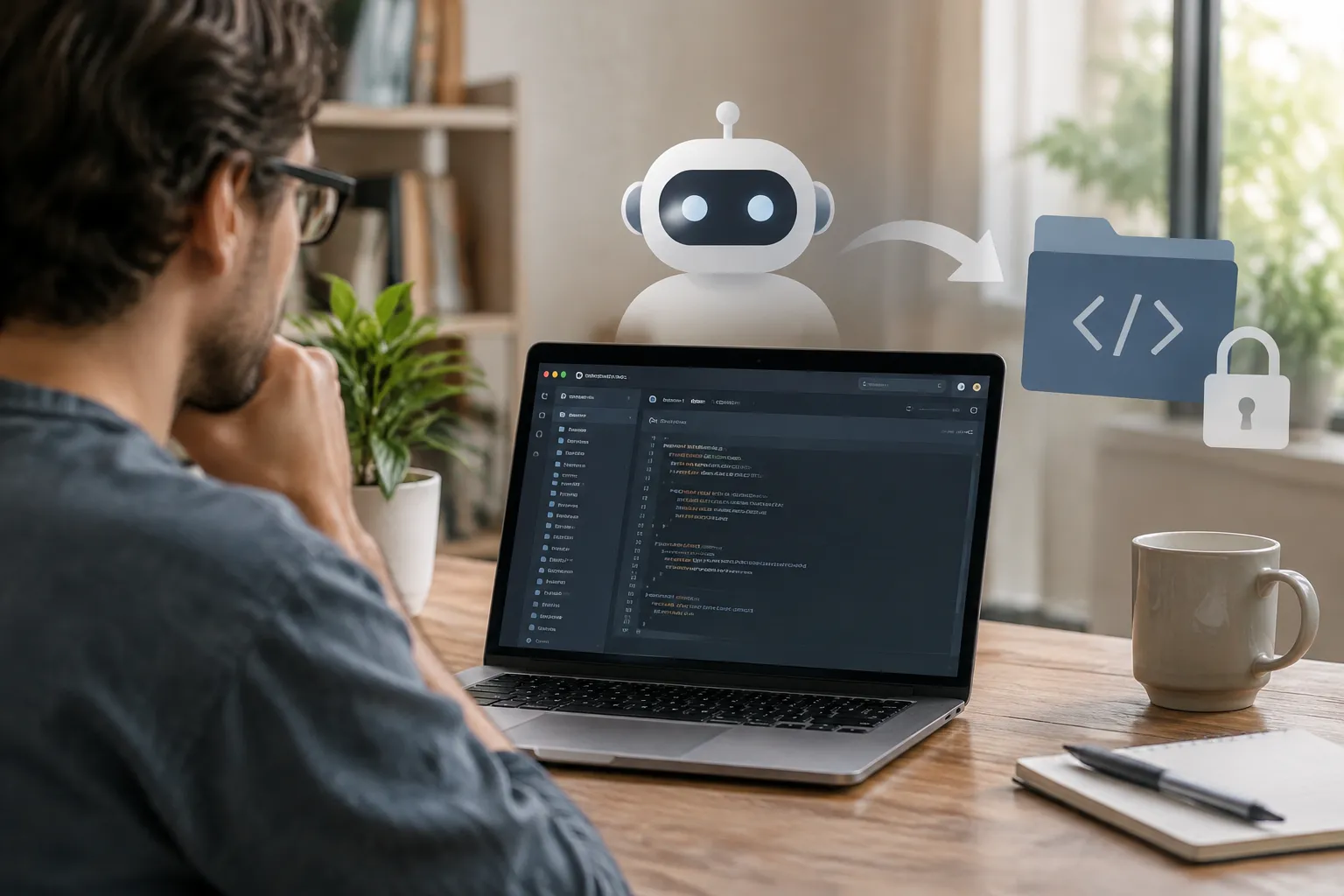
Pairing with a Model vs Handing the Ticket to an Agent
Two people open the same chat window on a Tuesday morning. One has a rough draft of a grant proposal and a model that will edit it sentence by sentence, waiting for instructions after every pass. The other has a one-line request and an agent that will spend the next forty minutes reading the funding guidelines, checking deadlines, drafting, revising, and filing the thing into a shared folder before sending a short note that it is done. Both are using AI. The experiences are not remotely the same.
The distinction matters beyond productivity. Pairing with a model and handing the ticket to an agent are two different relationships with software, and they train different habits of mind. One keeps a person inside the loop at every turn. The other pushes the person out to the edges and asks them to trust a process they cannot watch in detail. Choosing between them is not a matter of which is more advanced. It is a matter of which kind of control a person is willing to give up, and for what.
What pairing actually looks like at the desk
Pairing with a model is the mode most people already know. A prompt goes in, a response comes out, and the human decides what to do with it. The rhythm is conversational. Ask for a rewrite, get a rewrite, ask for a tighter version, get a tighter version. The model has no memory of the task beyond what sits in the context window, and it takes no action outside the chat.
The virtue of this arrangement is that every step passes through human judgment. A bad suggestion gets rejected before it touches a real document. A wrong fact gets caught because a person is reading closely. The work is slower, and the slowness is the point. The model functions as a fast, tireless drafting partner that never gets to drive.
There is a cost, though, and it shows up over a long session. The person stays mentally on. Every sentence requires a decision. After an hour of this, the attention frays, and the quality of the judgment drops even as the model keeps producing. Pairing is a high-focus activity disguised as a conversation, and few people can sustain it for a full afternoon without their editing getting sloppy.
What an agent does once the ticket leaves the hand
An agent takes the same model and wraps it in a loop. The model can now call tools, read files, search the web, run code, and check its own output against a goal. The person writes a request, hands it over, and walks away. The agent plans, acts, observes the result, and acts again until the task is finished or it gets stuck.
The shift is structural. In pairing, the human is the loop. In an agent, the loop lives inside the software, and the human becomes a supervisor who checks in at the start and the end. The middle, where the actual work happens, is a stretch of activity the person mostly does not see.
This is liberating when the task is well-defined and the stakes are low. Ask an agent to gather public contact details for forty small businesses and the result arrives as a spreadsheet. Ask it to summarize a stack of PDFs and the summaries come back organized. The time saved is real, and it is measured in hours rather than minutes.
The failure modes are not the same shape
Pairing fails loudly. A model produces a sentence that sounds authoritative and is flatly wrong, and the human catches it on the next read. The error is visible because the human is standing right there. The failure is annoying rather than dangerous.
Agents fail quietly. A model inside a loop can make a small wrong assumption early, then build twenty correct-seeming steps on top of it, and deliver a polished result that is wrong in a way no one notices until much later. The output looks finished. The spreadsheet has rows. The summary reads cleanly. The error sits buried in step three, and the person who handed over the ticket has no reason to look there.
This asymmetry is the central risk of delegation. The more competent an agent appears, the less inclined a person is to audit its work. A sloppy assistant invites scrutiny. A fluent one gets waved through. The exact quality that makes agents useful, their ability to produce plausible finished work unattended, is the quality that makes their mistakes hardest to catch.
Where the time savings actually come from
Advocates of agents point to the hours reclaimed, and the arithmetic is genuine. A task that takes a person ninety minutes of back-and-forth with a model might take an agent ten minutes of setup and five minutes of review. On paper, the agent wins by a wide margin.
The paper margin shrinks when review is done honestly. Checking an agent's work is a different skill from doing the work, and it is often harder. A person reviewing a spreadsheet of forty contacts has to verify names, roles, and addresses without having watched them being gathered. The review can take as long as the original task would have, and it demands a kind of vigilance that is easy to skip when the output looks tidy.
Pairing has the opposite profile. The time is spent up front and continuously, and the review is built into the process because the person is reviewing every step as it happens. Nothing arrives at the end needing a separate audit. The total is higher, but the shape is flatter, and the risk of a silent error is lower.
The tasks that reward each mode
Some work suits pairing almost exclusively. Anything where the person is still forming the idea, still unsure what the output should look like, still thinking out loud, belongs in a conversation with a model. Writing a difficult email, working through a design decision, exploring three possible framings of an argument: these need a partner who responds in real time and never runs ahead.
Other work suits an agent. Tasks that are repetitive, well-specified, and verifiable at the end are the natural home for delegation. Pulling data from a set of documents, monitoring a page for changes, running a routine check across a codebase, filing a batch of records: these have clear success conditions and the person does not need to watch every step.
The trouble starts in the middle, where most real work lives. A task is clear enough to delegate but consequential enough that a silent error would hurt. A report that will go to a client. A dataset that will feed a decision. A piece of code that will run in production. These are the cases where the choice between pairing and delegating is genuinely hard, and where the honest answer is often a hybrid: let an agent do the gathering, then sit with a model and review the pieces one by one.
What gets lost when the middle goes dark
There is a subtler cost to delegation that rarely shows up in productivity discussions. When a person pairs with a model, they see the work being made. They watch a sentence get rewritten, notice a fact get corrected, feel the shape of the argument shift. That exposure is how skill stays sharp. The person learns the terrain by walking it.
Hand the ticket to an agent and that learning disappears. The work arrives finished, and the person who commissioned it has no map of how it was built. Do this for a year and the skills that made the delegation possible start to atrophy. The supervisor who cannot do the job they are supervising is in a fragile position, dependent on a system they no longer fully understand.
This is why the most experienced people in a field tend to be cautious about agents for their core work and enthusiastic about them for the periphery. They delegate the filing and the gathering and the monitoring. They keep the thinking close, paired, watched. They protect the part of the job that keeps them competent.
Reading the ticket before it leaves the hand
The decision between the two modes comes down to a question about reversibility. If the agent gets it wrong, how quickly can the error be found and undone? A wrong draft of an internal note is cheap to fix. A wrong figure sent to a regulator is not. The cheaper the undo, the more delegation makes sense. The more expensive the mistake, the more the work should stay in a paired loop where errors surface early.
A second question concerns observability. Can the person see enough of the agent's process to trust the result? An agent that logs every step and cites every source is safer to delegate to than one that returns a clean answer with no trail. The trail is not bureaucracy. It is the thing that makes review possible at all.
Most people will end up using both modes in the same week, sometimes in the same hour. The pairing happens in the morning, when the thinking is hard and the stakes are high and the work needs a partner who stays in the room. The delegation happens in the afternoon, when the thinking is done and the remaining labor is mechanical and the ticket can safely leave the hand.
The mistake is treating one mode as the future and the other as a transitional phase. They solve different problems. A person who only pairs will drown in busywork they could have delegated. A person who only delegates will gradually lose the judgment that told them what to delegate in the first place. The skill worth building is knowing, task by task, which of the two is sitting across the desk.